Commercial HVAC Equipment
Commercial Boiler Repair, Service & Replacement in Phoenix, AZ
The heating season here is short. The hot-water season is twelve months long.
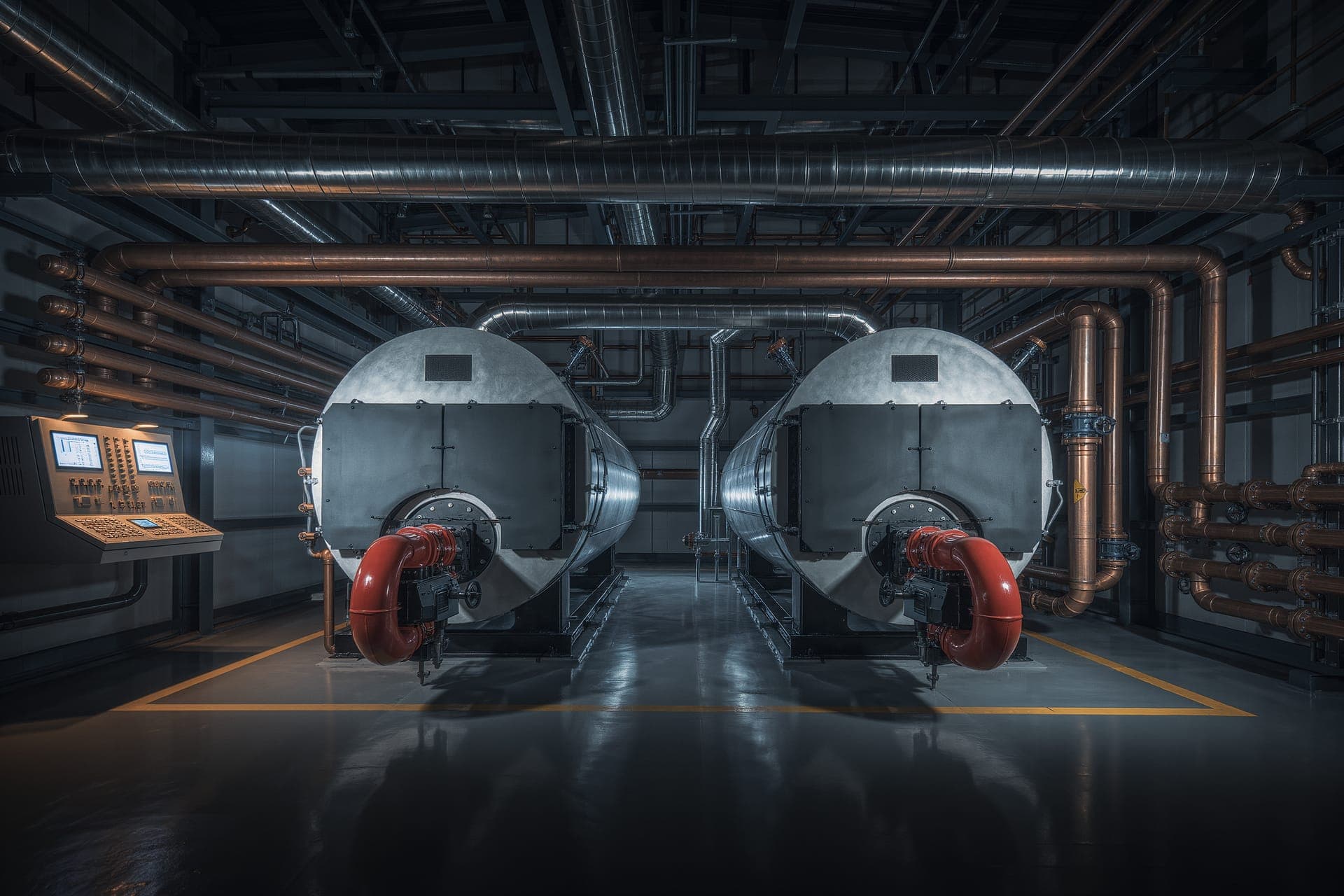
A commercial boiler in Phoenix does less space heating than one in Denver and more of everything else. It supplies domestic hot water to hotels, hospitals and multifamily properties every day of the year. It heats pools and spas. It warms water-source heat-pump loops on winter mornings. It drives steam for laundries, kitchens and sterilization. Bleuwave services all of it — condensing and non-condensing hydronic boilers, domestic water heaters, pool heaters and steam boilers — from the burner and heat exchanger to the pumps, controls and venting that make the system work.
The short heating season creates its own failure mode. A boiler that sits nearly idle from March to November wakes up in December with dry seals, seized pumps, drifted controls and a burner that has not fired in months. The first cold morning is when the facility manager learns the boiler had a problem in September. Preventive service before the season, not after, is the difference.
Symptoms We Are Called For
What It Looks Like, and What It Usually Is
| Symptom | Likely causes |
|---|---|
| Boiler locks out on ignition | Failed igniter or flame sensor, gas valve fault, blocked vent or combustion air, or a safety control tripping — each requires field verification. |
| Insufficient hot water in the morning | Boiler undersized for recovered demand, failed circulator, scaled heat exchanger reducing capacity, or a control setpoint drift. |
| Rumbling or kettling noise | Scale on the heat exchanger causing localized boiling — a water-quality problem that will eventually crack the exchanger. |
| Rising gas consumption | Combustion out of tune, scaled heat exchanger, short cycling from oversizing, or a condensing boiler that is no longer condensing due to high return temperatures. |
| Water on the floor | Relief valve discharge from overpressure, a leaking heat exchanger, failed pump seal, or condensate line blockage on a condensing unit. |
Boiler Types in Phoenix Commercial Buildings
Condensing boilers — high-efficiency units that extract additional heat by condensing flue gases — have become standard for new hydronic and domestic-water installations. AERCO Benchmark, Lochinvar Crest and Knight XL, Patterson-Kelley Mach, Fulton Endura, Weil-McLain SlimFit and Evergreen, Laars MagnaTherm and NeoTherm, Camus Dynaforce, and Thermal Solutions Arctic and Evolution are the families most often on nameplates. Non-condensing copper-fin boilers from Raypak (XTherm, Hi Delta), Lochinvar Copper-Fin and Laars Mighty Therm remain common for pools and older hydronic systems. Cleaver-Brooks firetube and watertube boilers and Miura modular steam units serve steam and process loads. Legacy cast-iron sectional boilers from Burnham and Weil-McLain still operate in older Valley buildings, decades past their expected life.
Phoenix Operating Realities
Water quality drives boiler life here more than climate does. Hard water scales heat exchangers, and scale on a fire-side surface causes local overheating that cracks tubes and heat exchangers. Condensing boilers are particularly sensitive: their compact stainless or aluminum heat exchangers need clean, correctly treated water to reach their rated efficiency and their rated life.
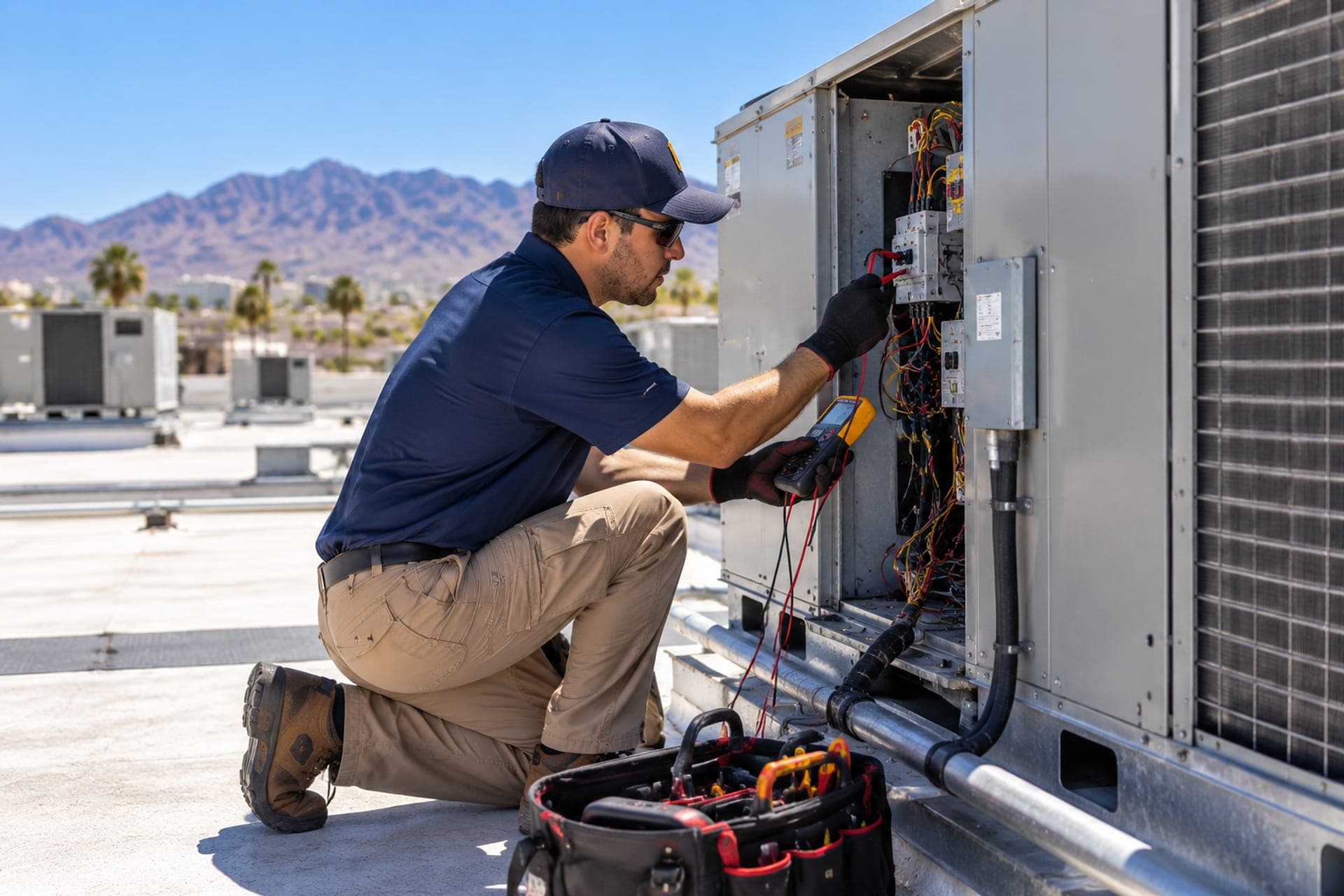
The intermittent duty cycle matters too. Boilers that cycle on and off across a mild winter — firing for an hour in the morning, idling all afternoon — experience more thermal stress per operating hour than boilers that run steadily. Pool and domestic-water boilers that run year-round in a rooftop mechanical room see the opposite problem: summer ambient temperatures that stress electronics and controls.
Combustion, Safety and Repair
Every boiler service includes combustion analysis — measuring oxygen, carbon monoxide and flue temperature to verify the burner is firing cleanly and efficiently. It also includes the safety chain: low-water cutoffs, pressure relief valves, flame safeguards, high-limit controls and venting integrity. A boiler that fires but has a compromised safety control is a liability, and we treat safety verification as non-negotiable.
Repairs cover burners, ignition systems, gas valves, heat exchangers, circulator pumps, expansion tanks, control boards, sensors, venting and condensate neutralizers on condensing units. When a heat exchanger has failed, the decision between heat-exchanger replacement and boiler replacement depends on age, efficiency, parts availability and what the rest of the boiler has left — an assessment we document with numbers.
Replacement and Modernization
Replacing a non-condensing boiler with a condensing unit typically improves efficiency substantially, but it is not a drop-in swap. Condensing boilers need low return-water temperatures to condense, which can mean adjustments to the distribution system; they need condensate drainage and neutralization; and they often need different venting. Modular condensing installations — several smaller boilers staged together — offer redundancy that a single large boiler cannot, which matters for a hotel that cannot run out of hot water.
Our replacement process surveys the mechanical room, venting path, gas service, water chemistry, distribution system and controls, then proposes equipment sized to the actual load rather than the original nameplate. Permits, commissioning and combustion setup are included, and the system is handed over with documentation.
Manufacturers We Encounter
Brands in the Boilers Category
Bleuwave services these manufacturers on an independent basis. Each page covers the families we see in Phoenix and how we approach them.
Straight Answers
Questions We Hear on This One
We barely use heat. Do we really need annual boiler service?
Yes, and low use is part of the reason. Idle boilers develop problems that only surface on the first cold morning, and combustion safety should be verified annually regardless of run hours. If your boiler also supplies domestic hot water or a pool, it is working year-round and needs the service on its own merits.
Should we replace our old copper-fin boiler with a condensing boiler?
Often it pays, but not always as a straight swap. Condensing boilers need low return-water temperatures and proper condensate handling to deliver their efficiency. We evaluate your distribution system and usage pattern before recommending a conversion, and we show the projected savings against the installation cost.
Do you service steam boilers?
Yes — including Cleaver-Brooks firetube units and Miura modular steam boilers used in healthcare, food service and laundry applications. Steam systems have their own safety and water-treatment requirements, which we address as part of service.
Our cast-iron sectional boiler is forty years old and still runs. Should we worry?
It should be inspected carefully and its safety controls verified, and you should have a replacement plan and budget in hand. Cast-iron boilers can run for decades, but parts become scarce, efficiency is poor by current standards, and a section failure in January is an emergency rather than a project.
Free Commercial Estimate
Get a Straight Answer and a Free Estimate
Tell us what the building needs. We'll tell you what it costs — plainly, promptly, and without a sales pitch.
Same-day response. Answered by a person with the authority to act, not a queue with a hold song.
Upfront pricing. The figure quoted is the figure invoiced. The arithmetic never changes after the fact.
Veteran owned & operated. Early, exact, and accountable — the doctrine came before the company.
Prefer the phone? It's answered around the clock: (480) 863-5855