Commercial HVAC Equipment
Commercial Unit Heater, Duct Furnace & Radiant Heater Repair in Phoenix, AZ
Big open buildings get cold faster than anyone expects. Heating them efficiently is a different problem from heating an office.
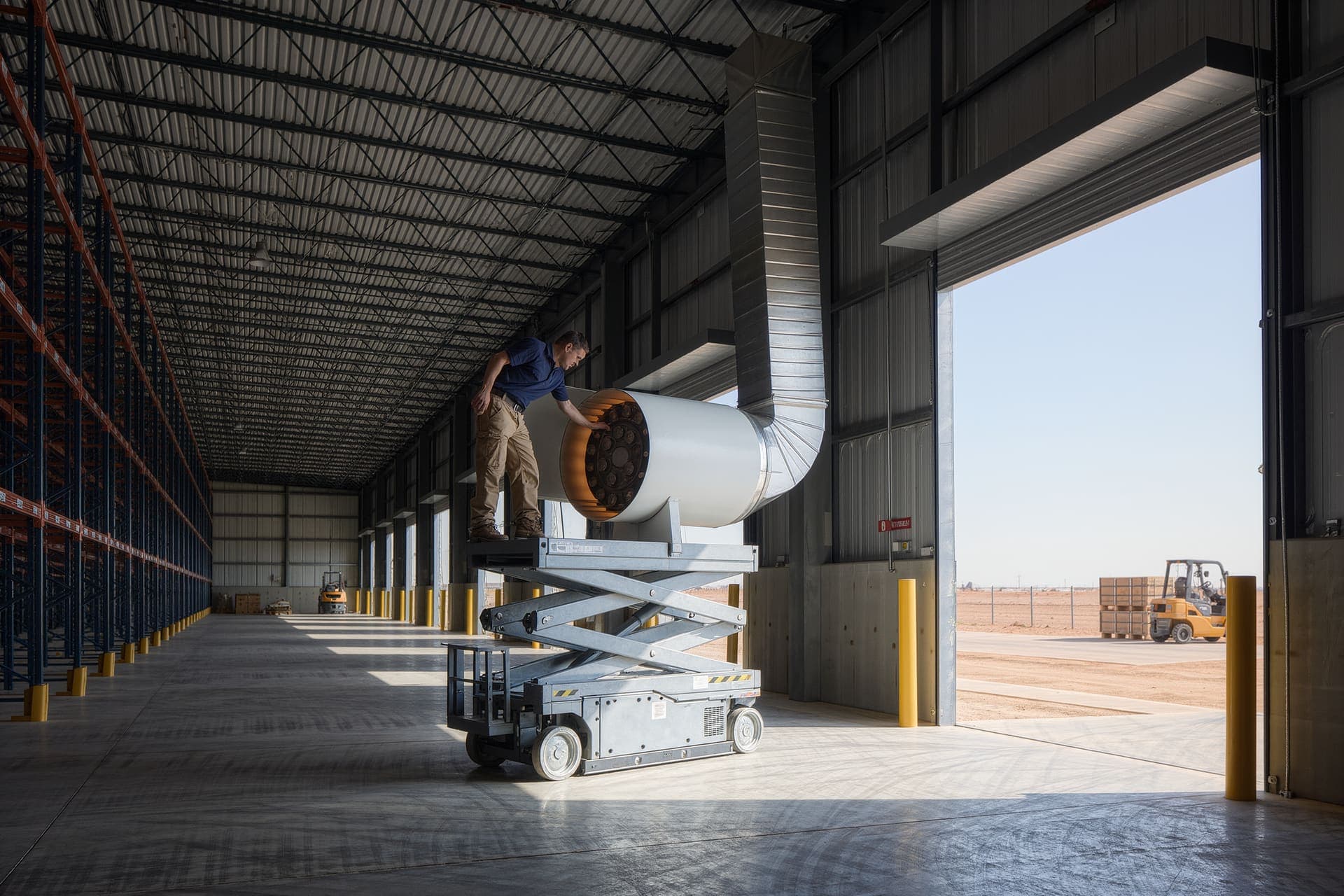
Warehouses, distribution centers, auto shops, fabrication floors, service bays and aircraft hangars do not heat like offices. The volume is enormous, the ceilings are high, the doors open constantly and the occupants are moving. Unit heaters, duct furnaces and infrared radiant heaters are the equipment designed for these spaces: simple, powerful, mounted high and out of the way. Bleuwave services gas-fired, hydronic, electric and radiant heating equipment throughout the Phoenix industrial and commercial market, from ignition and combustion to heat exchangers, fans and controls.
The Phoenix heating season is short, and that shortness is precisely the problem. Equipment sits idle from March until the first cold front in December. Then a week of 38-degree mornings arrives, every shop and warehouse in the Valley fires its heaters for the first time in nine months, and the units that developed problems while sleeping announce themselves all at once. Fall service before the season prevents the December scramble.
Symptoms We Are Called For
What It Looks Like, and What It Usually Is
| Symptom | Likely causes |
|---|---|
| Heater will not ignite on the first cold morning | Dust-fouled burner or pilot, failed igniter or flame sensor, stuck gas valve, or a pressure switch tripping on a blocked vent. The idle-season failure mode. |
| Heater ignites but shuts off quickly | Flame sensor fouled or failing, high-limit tripping from restricted airflow, or a rollout switch indicating a combustion problem that must be inspected. |
| Combustion odor or headaches in the space | Cracked heat exchanger or venting failure. Shut the unit down and call — this is a safety issue, not a comfort issue. |
| Warm at the ceiling, cold on the floor | Stratification — forced-air heaters in a high-bay space with no destratification fans. Often an equipment-type mismatch rather than a malfunction. |
| Radiant heater emitter tube glowing unevenly | Burner or vacuum-pump problem, blocked tube, or venting restriction. |
Equipment Types
Gas-fired unit heaters — Modine Hot Dawg, PDP and PTP, Reznor UDX and UEZ, Sterling GG — hang from the structure, draw room air across a heat exchanger and blow it back out; they are the most common industrial heating equipment in the Valley. Duct furnaces (Reznor, Modine) add gas heat to an air-handling or make-up-air stream. Hydronic unit heaters (Sterling, Modine) use hot water from a boiler. Infrared radiant heaters from Schwank, Roberts-Gordon and Space-Ray heat surfaces and people directly rather than the air, which makes them unusually effective in high-bay spaces and loading docks where heated air would simply rise to the roof.
Cambridge Air Solutions S-Series direct-fired heaters serve large warehouses with high-volume heated ventilation. Electric unit heaters appear where gas is unavailable, at a much higher operating cost.
Phoenix Duty Cycle
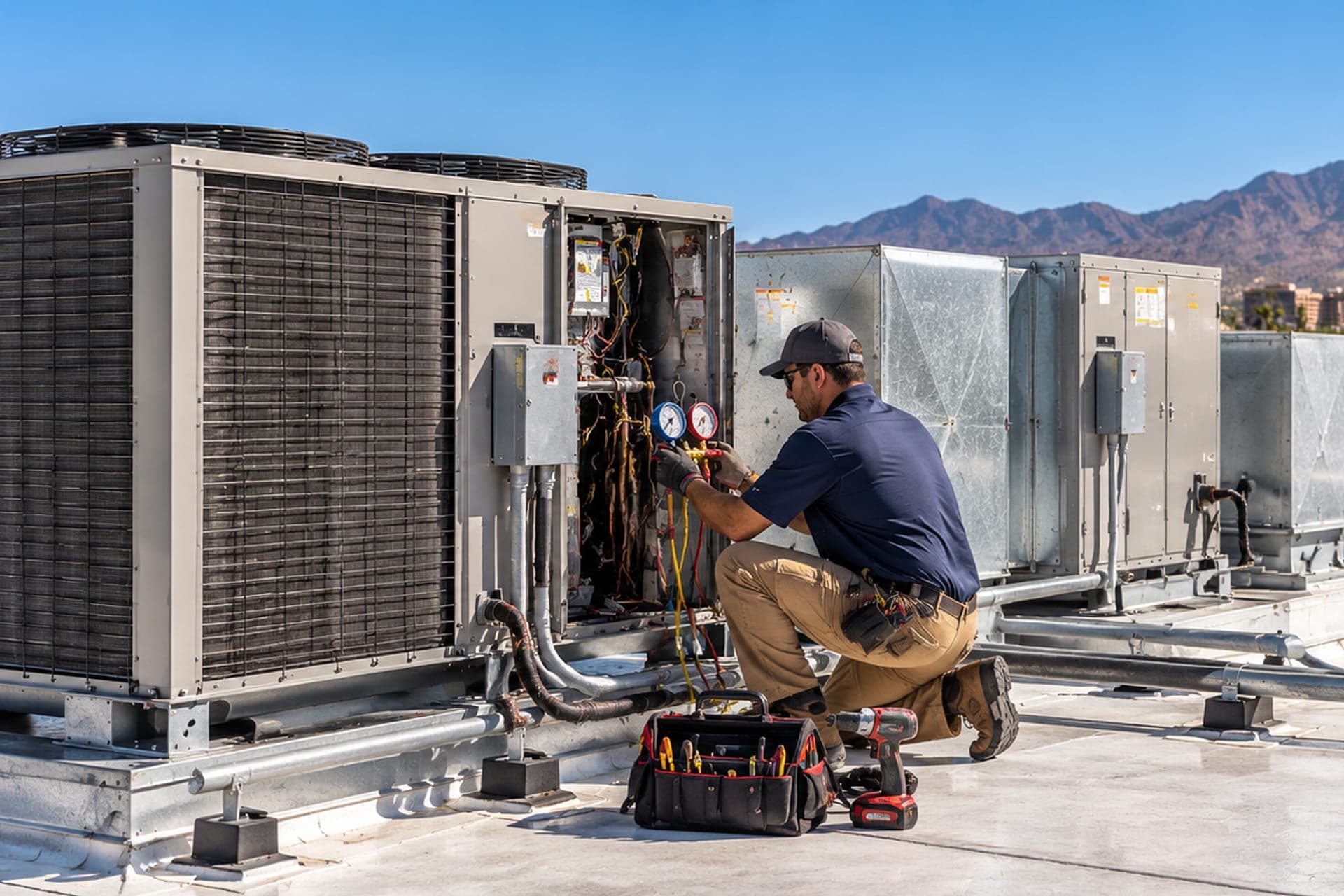
Low run hours and long idle periods create the local failure pattern: seized fan motors, dust-fouled burners, spider-webbed pilot assemblies, corroded flame sensors, failed igniters and gas valves that stuck while unused. Heat exchangers on older units may have cracked during a previous season without anyone noticing, which makes the first-fire combustion safety check the most important service of the year.
Roof-mounted and exposed units add summer heat exposure to the equation. Electronics, wiring and gas-valve solenoids that bake on a roof through August age faster than their run hours suggest. Dust from monsoon season lands in burner compartments and on heat-exchanger surfaces.
Service and Safety
Every unit-heater service includes ignition and flame-safeguard verification, burner cleaning and inspection, heat-exchanger inspection for cracks and corrosion, gas-pressure verification, venting inspection, fan motor and blade service, thermostat and control verification, and combustion analysis. A cracked heat exchanger in a gas-fired unit heater puts combustion products into the occupied space; it is the one defect that is never deferred. Radiant heaters get burner, reflector, emitter tube and venting inspection; hydronic units get coil, valve and fan service.
Repairs cover igniters, flame sensors, gas valves, pressure switches, control boards, fan motors, heat exchangers and venting. Many units are inexpensive enough that a failed heat exchanger on an older heater is a replacement rather than a repair; we say so plainly when that is the case.
Replacement and Upgrade
Replacement decisions in this category are simpler than for cooling equipment: units are relatively inexpensive, installation is straightforward, and the calculation usually turns on heat-exchanger condition, efficiency and whether the current equipment type suits the space. A common upgrade is converting a warehouse from forced-air unit heaters, which heat the roof, to infrared radiant heaters, which heat the floor and the people — often with a meaningful reduction in gas use. Another is adding zoning and controls so a 100,000-square-foot facility does not heat its entire volume for a crew working in one corner. We evaluate the space, the use pattern and the utility spend before recommending equipment.
Manufacturers We Encounter
Brands in the Unit Heaters & Radiant Category
Bleuwave services these manufacturers on an independent basis. Each page covers the families we see in Phoenix and how we approach them.
Straight Answers
Questions We Hear on This One
Should we schedule heater service if we only run them a few weeks a year?
Yes — that is exactly when service matters. Nine idle months breed the failures that appear on the first cold morning, and gas-fired equipment needs its combustion safety verified annually regardless of run hours. Fall service is inexpensive insurance against a December emergency.
Would infrared radiant heaters work better in our warehouse?
Often, yes. Forced-air unit heaters heat the air, which rises to the roof of a high-bay building. Radiant heaters warm the floor, the equipment and the people directly. The result is comfortable occupants at a lower gas bill. We assess ceiling height, occupancy pattern and door traffic before recommending a conversion.
Can you repair our old Reznor and Modine heaters?
Yes. These are durable, widely serviced product lines and parts remain available for most families. We repair them on an independent basis and tell you when a heat-exchanger condition makes replacement the better economic choice.
Do you service the heating on our make-up air units?
Yes — gas-fired duct furnaces and direct-fired heating sections on make-up air equipment are part of our heating and ventilation practice.
Free Commercial Estimate
Get a Straight Answer and a Free Estimate
Tell us what the building needs. We'll tell you what it costs — plainly, promptly, and without a sales pitch.
Same-day response. Answered by a person with the authority to act, not a queue with a hold song.
Upfront pricing. The figure quoted is the figure invoiced. The arithmetic never changes after the fact.
Veteran owned & operated. Early, exact, and accountable — the doctrine came before the company.
Prefer the phone? It's answered around the clock: (480) 863-5855