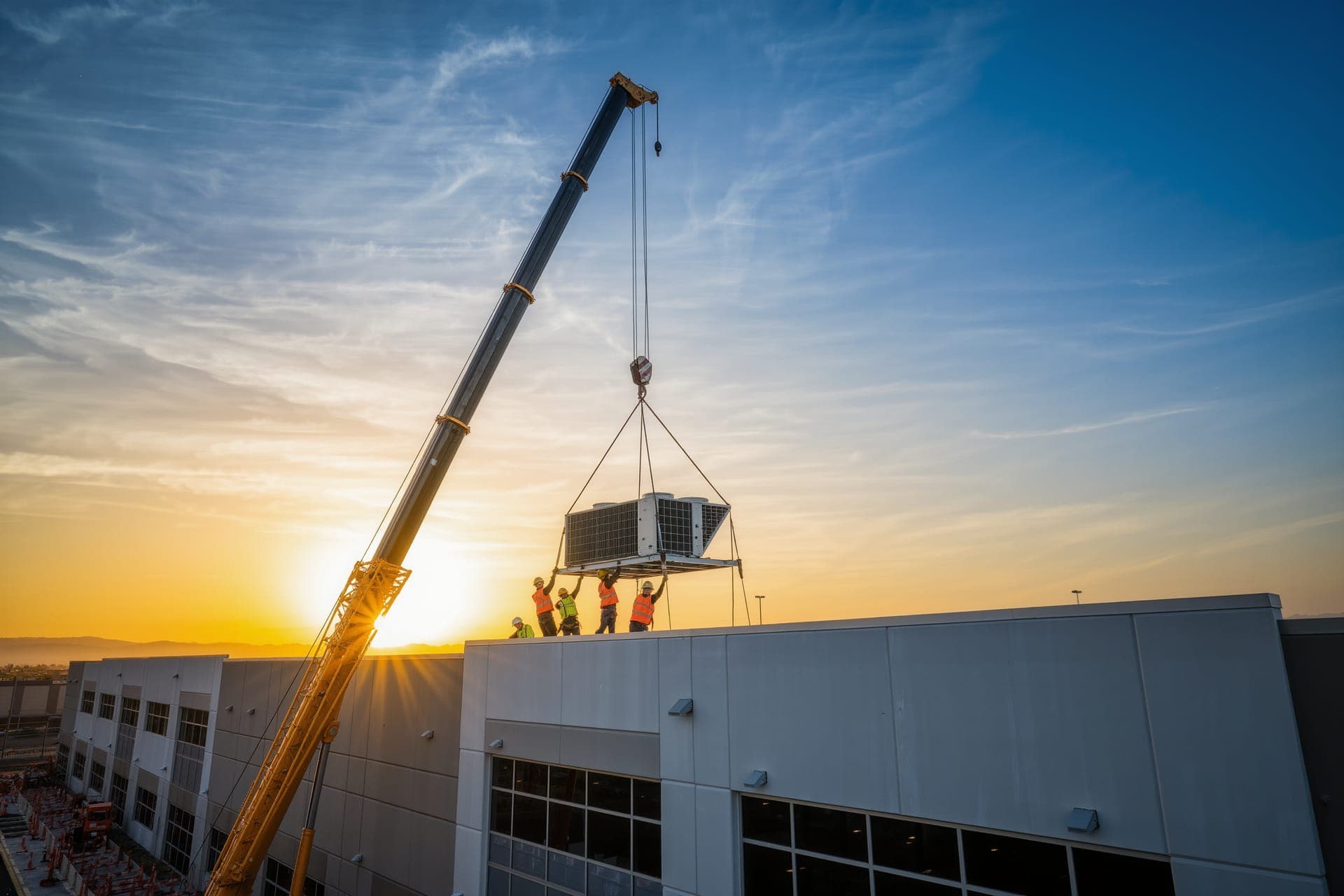
The Replacement Decision
Commercial HVAC Repair or Replace in Phoenix, AZ
The question every building owner eventually asks, answered with arithmetic instead of instinct — by equipment type, in a climate that shortens every answer.
Every piece of commercial HVAC equipment reaches a day when the next repair is a bad investment. The difficulty is that the day does not announce itself. A compressor fails at year eleven; a contractor quotes the compressor; the owner approves it; and eighteen months later the condenser coil goes, on a unit whose refrigerant is now scarce. The repair was defensible. The sequence was not.
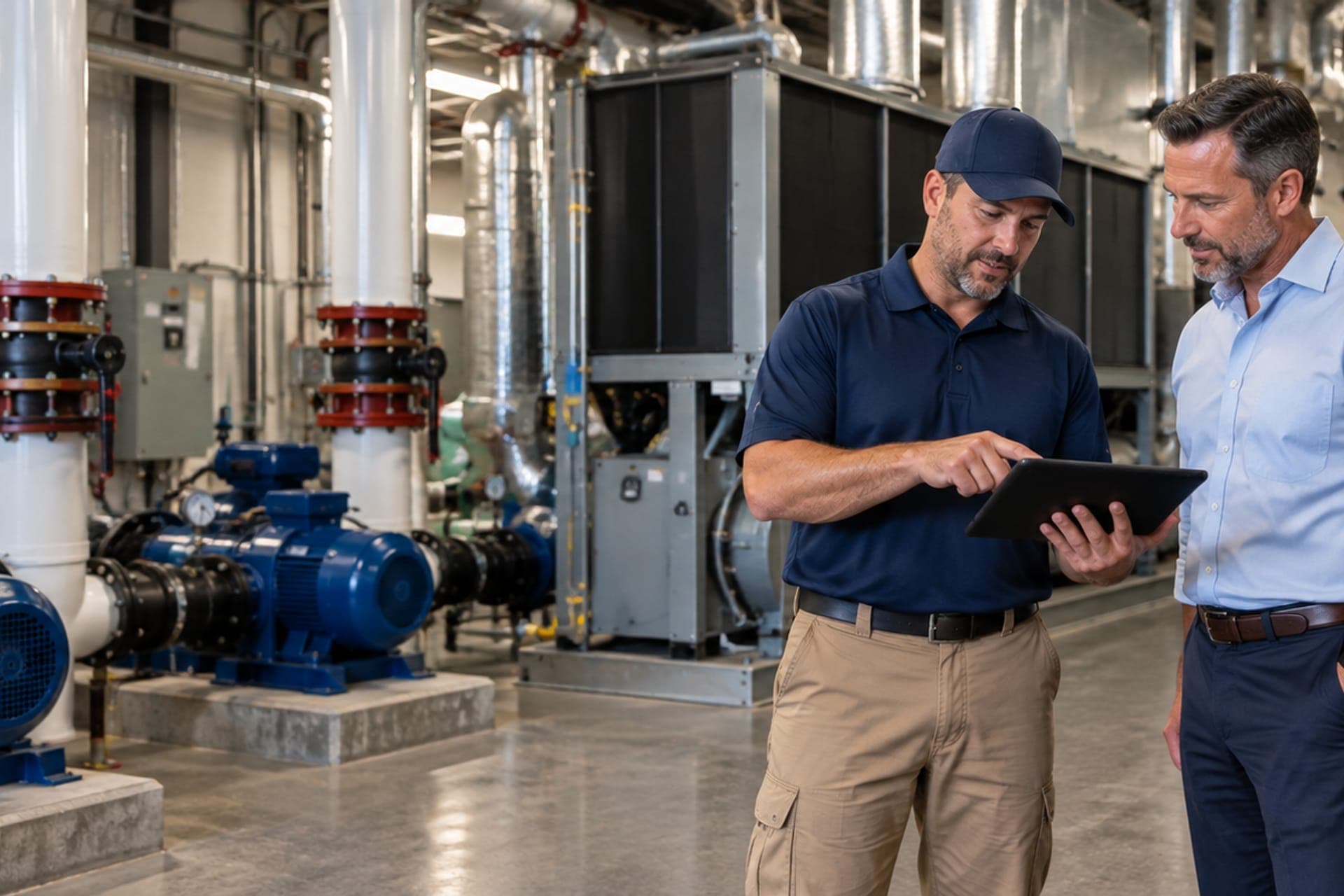
Bleuwave approaches the repair-or-replace question as an assessment rather than a quote. We look at the whole unit — every major component's condition and remaining life, the refrigerant, the efficiency against current equipment, the failure history — and we produce two numbers: what it costs to repair and keep running, and what it costs to replace and what that saves. The decision is the owner's. Our job is to make it an informed one.
Phoenix shortens every equipment life. A unit rated for twenty years elsewhere gives fifteen here, and a neglected one gives ten. The heat also raises the stakes of the decision: an inefficient unit costs more to run in a Valley summer than almost anywhere, and a failed one costs more in lost business.
The Factors
What Moves the Line
01
Age and Phoenix hours
Design life is a national number. A rooftop unit that has run fifteen Valley summers has the wear of twenty elsewhere. We assess condition, not the calendar — but the calendar sets expectations.
02
Refrigerant
R-22 is gone from production and expensive as reclaim. R-410A and R-404A face phase-down. A major refrigerant-circuit repair on legacy refrigerant is often the decisive factor toward replacement.
03
The rest of the unit
A new compressor in a unit with a corroded condenser coil, tired fan motors and a control board from another era is a repair with a short horizon. We assess every major component before recommending any single one.
04
Efficiency and utility cost
Current equipment is substantially more efficient than what it replaces. In a Phoenix cooling season the difference is real money, and it belongs in the comparison.
05
Failure history and cost of the next failure
A unit that has needed three repairs in two summers is telling you something. So is the cost of a failure in July — lost sales, spoiled product, a tenant who does not renew.
06
The building has changed
Occupancy, use and ventilation requirements move. Equipment sized for the original building may be wrong for what the building is now, and a replacement is the chance to size it right.
By Equipment Type
The Decision Is Different for Every Machine
Packaged rooftop units
The most common decision in Phoenix. Light commercial units are inexpensive enough that a major repair past ten years is often close to a replacement on the existing curb. Larger applied rooftops with sound cabinets are candidates for component retrofit.
About rooftop units →Split systems
Fail in halves. A new condenser married to an old, mismatched or R-22 indoor coil underperforms and fails early. We price the matched replacement against the half-replacement honestly.
About split systems →Chillers and cooling towers
Major capital, long lead time, crane and outage. Retrofit — new compressors, drives, controls, tower fill — often extends life for a fraction of replacement. Replacement is planned a season ahead.
About chillers →Water-source heat pumps, fan coils and PTACs
Replaced one at a time, by age and exposure, with no building-wide outage. The loop or plant that serves them is assessed alongside the fleet.
About water-source heat pumps →VRF systems
Platforms are not cross-compatible. A failed outdoor unit on a legacy platform usually means a full-system replacement engineered from current zoning. Refrigerant leaks on aging piping factor heavily.
About vrf / vrv →Boilers and unit heaters
Heat-exchanger condition decides. A cracked exchanger on an old unit heater is a replacement; a cast-iron boiler with a failed section is usually a condensing conversion. Combustion safety is never deferred.
About boilers →Air handlers
The casing is the asset. Coils, fans, dampers and controls are replaced within a sound casing at a fraction of replacement cost. Replacement is for failed structures or changed requirements.
About air handlers →Controls
Legacy platforms — pneumatics, proprietary DDC out of support — are migrated in phases. The controls layer is often the highest-return replacement in the building.
About controls & bas →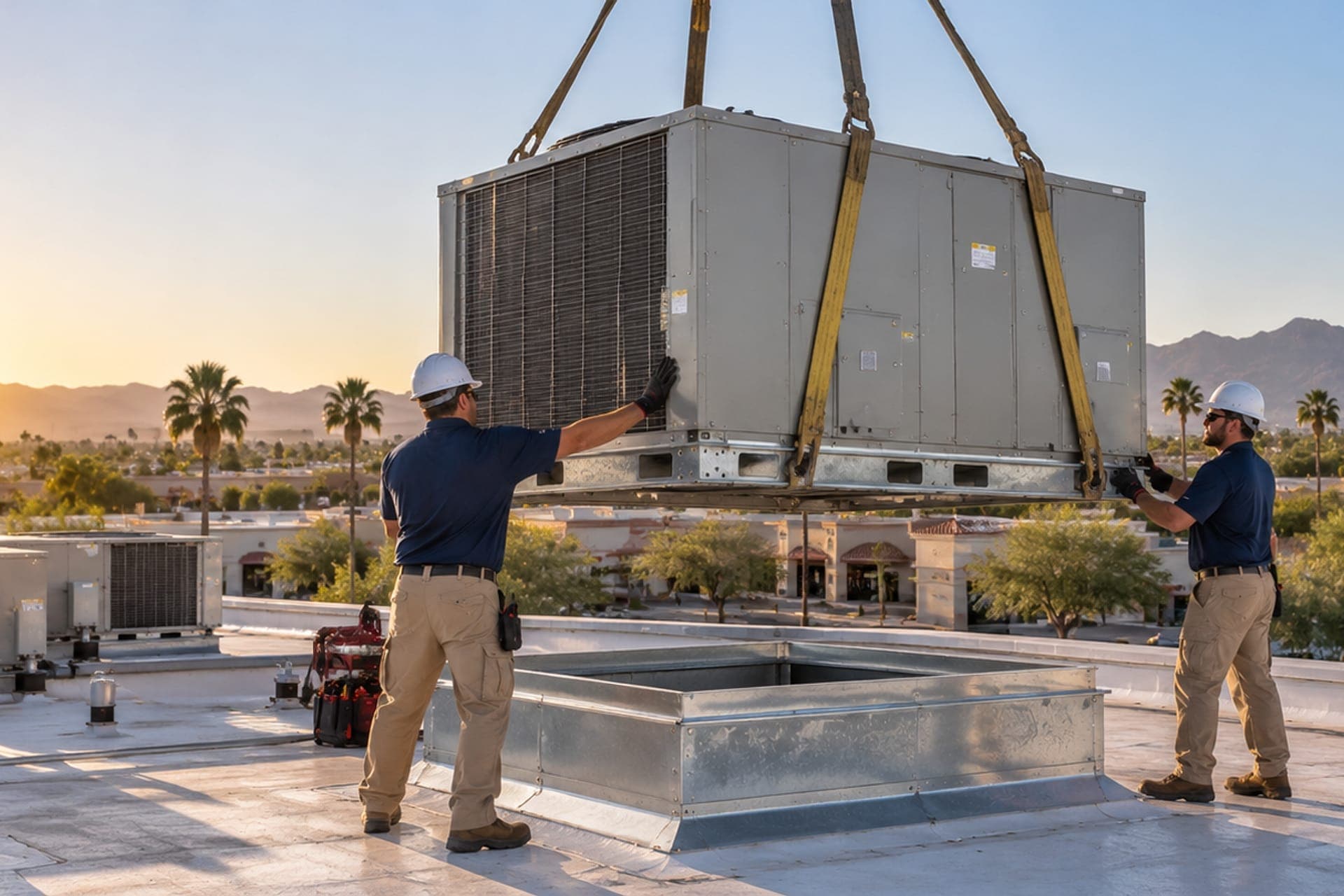
How Replacement Is Done
Sized to the Building, Scheduled to the Season, Commissioned in Writing.
A replacement begins with a load calculation, not the old nameplate. The building has changed; the equipment should reflect what it does now. Curb adapters, structural review, electrical service, gas, condensate, refrigerant piping, controls integration and permits are surveyed before equipment is ordered. Crane work is scheduled for the cool season and, where the building cannot lose cooling, temporary cooling is arranged.
Commissioning is documented: refrigerant charge verified against manufacturer targets, airflow measured, controls tested through every stage, and the record handed over with registered warranties. The process is described in detail on our installation page, and the standing replacement quote offer puts a number on the inevitable before it chooses its own date.
Straight Answers
Questions About the Decision
Is there a rule of thumb for repair versus replace?
The common one — replace when a repair costs more than half of a new unit on equipment past mid-life — is a starting point, not an answer. Refrigerant, efficiency, failure history, remaining life of the other components and the cost of the next failure all move the line. We show the arithmetic rather than the rule.
Our unit runs R-22. Does that mean it has to be replaced?
Not automatically. A small leak repair on an R-22 unit with years of life left can still be sound. A compressor failure or a major refrigerant loss on an aging R-22 unit almost always tips the decision toward replacement, because the refrigerant alone can approach the cost of the repair.
Can we replace equipment in phases?
Often, and for some equipment types it is the natural approach — water-source heat pumps, fan coils, PTACs and modular chillers are replaced unit by unit. Rooftop fleets are replaced in order of condition. We build multi-year schedules from maintenance data so replacement becomes a budget line.
When is the best time to replace cooling equipment in Phoenix?
October through March. A planned replacement in the cool season costs less, avoids the summer outage and gives the crane and the equipment lead time. An emergency replacement in July costs more in every way.
Will you quote a repair and a replacement on the same visit?
Yes. That is the point. The assessment produces both numbers, with an efficiency estimate against your current utility spend, so the decision is yours and it is informed.
Free Commercial Estimate
Get Both Numbers Before You Decide
A repair quote, a replacement quote and the utility-cost difference between them — from one assessment, at no charge.
Same-day response. Answered by a person with the authority to act, not a queue with a hold song.
Upfront pricing. The figure quoted is the figure invoiced. The arithmetic never changes after the fact.
Veteran owned & operated. Early, exact, and accountable — the doctrine came before the company.
Prefer the phone? It's answered around the clock: (480) 863-5855