Air & Ventilation
The Most Important Duct You'll Never See
Grease duct is fire protection wearing a ventilation costume.
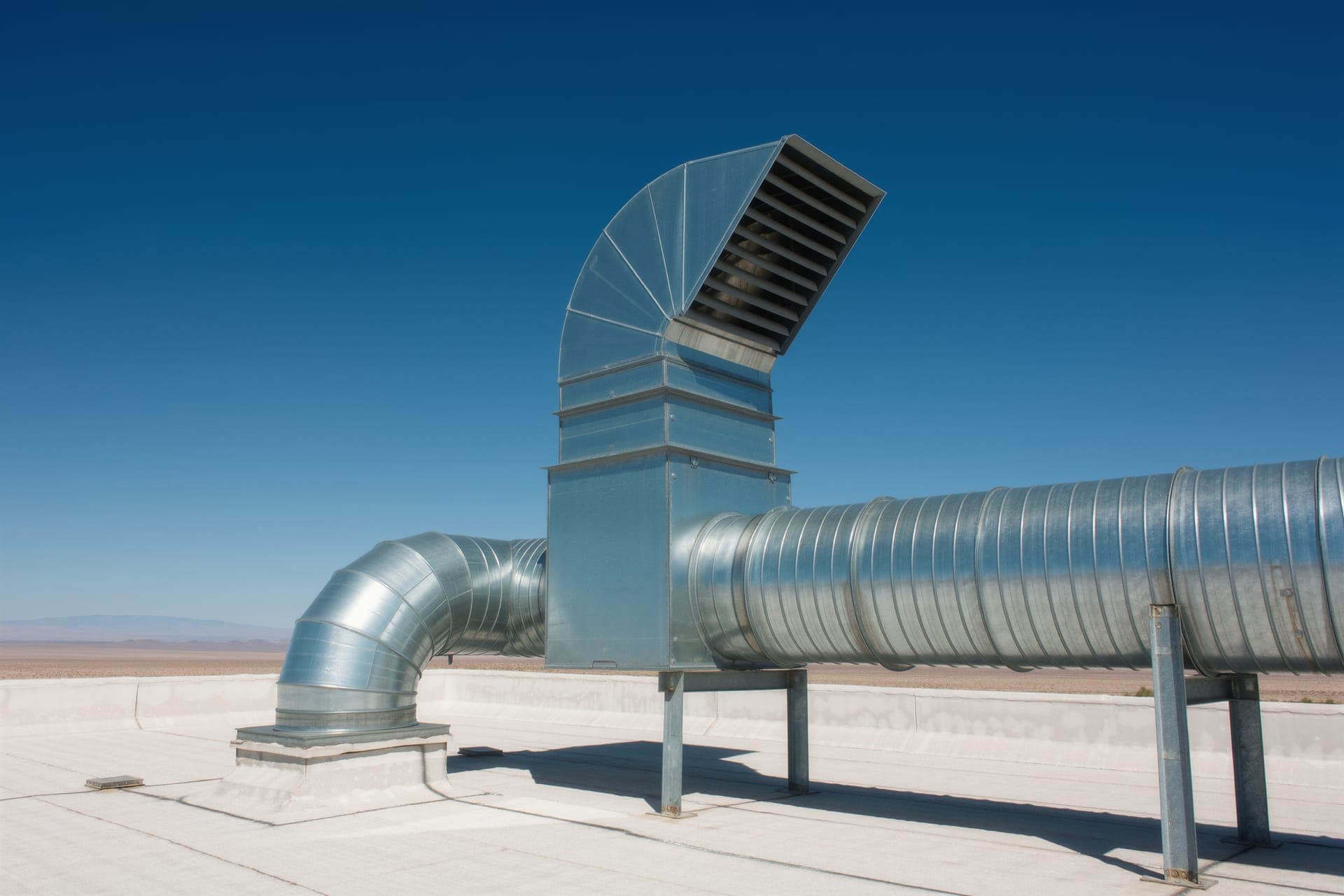
Every hour your kitchen runs, superheated, grease-laden air moves through a hidden steel passage on its way out of the building. Done right, that passage is a continuous, liquid-tight weld from hood to fan — boring, invisible, and utterly reliable. Done wrong, it is a fire waiting for a spark and a lawsuit waiting for a date.
We fabricate, install, and repair commercial grease duct to NFPA 96 across the Phoenix metro — the load-bearing half of any kitchen ventilation system. Continuous welds, proper clearances, access where the code demands it, and documentation your insurer will actually accept.
01
Continuous-weld construction
16-gauge steel, liquid-tight welds, zero shortcuts — the NFPA 96 way.
02
Code clearances & enclosures
Fire-rated shafts and combustible clearances handled correctly through the whole run.
03
Access panels per standard
Cleanout access everywhere the code requires, so maintenance is possible, not theoretical.
04
Inspection-ready documentation
Photo records and compliance reports your AHJ and insurer will accept.
Welded Liquid-Tight, Because the Code Means It
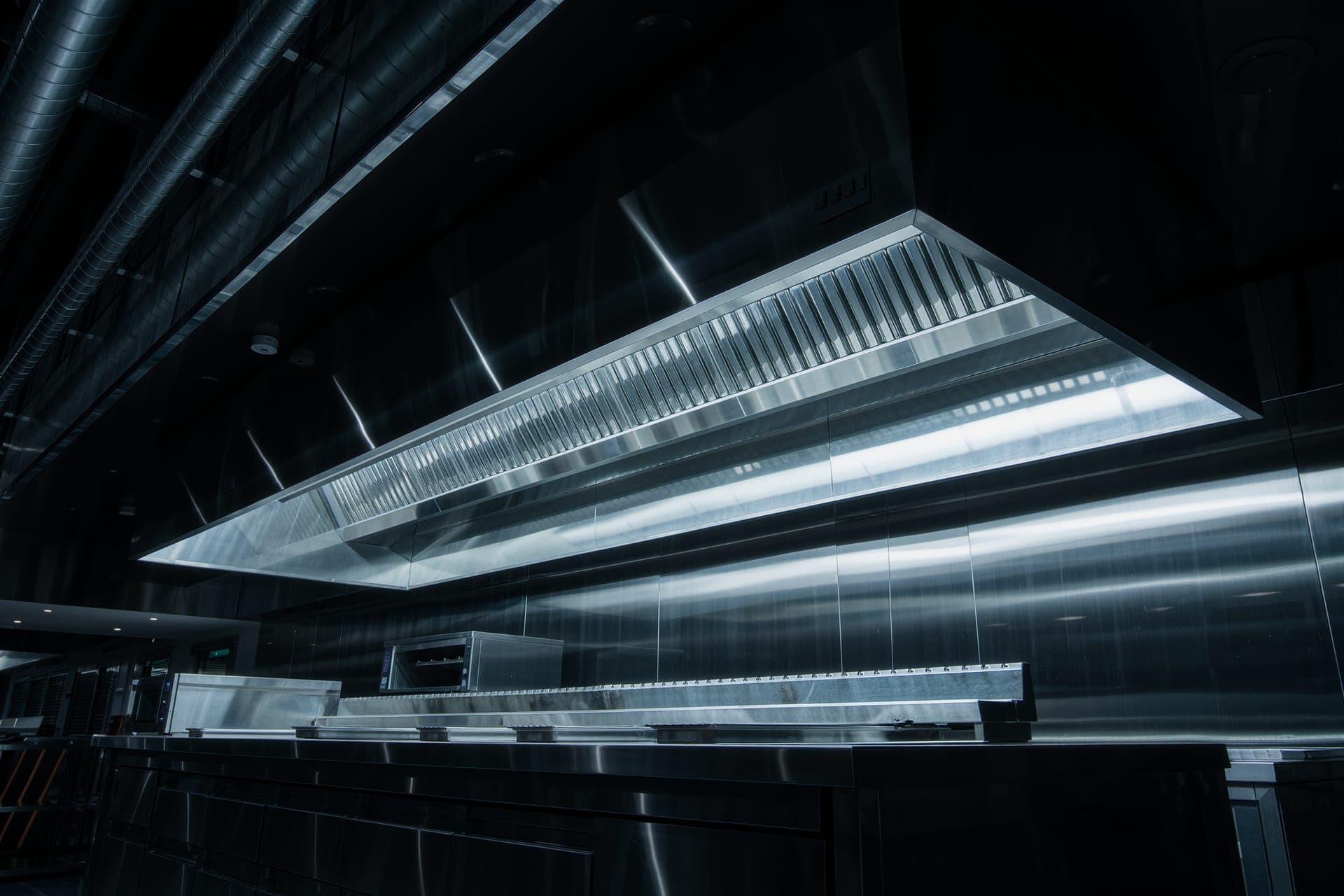
NFPA 96 requires grease duct with continuous external welds — liquid-tight, without screws, without sealant shortcuts, without the gaps where grease collects and fires begin. Our welders build to that standard in 16-gauge steel, and every joint is inspected before it is enclosed.
Where duct passes through the building, we install the fire-rated enclosures and maintain the clearances to combustibles that the code prescribes. Access panels go in every place the standard requires — because a duct that cannot be cleaned is a duct that cannot be safe.
Repairs, Retrofits, and Straight Talk
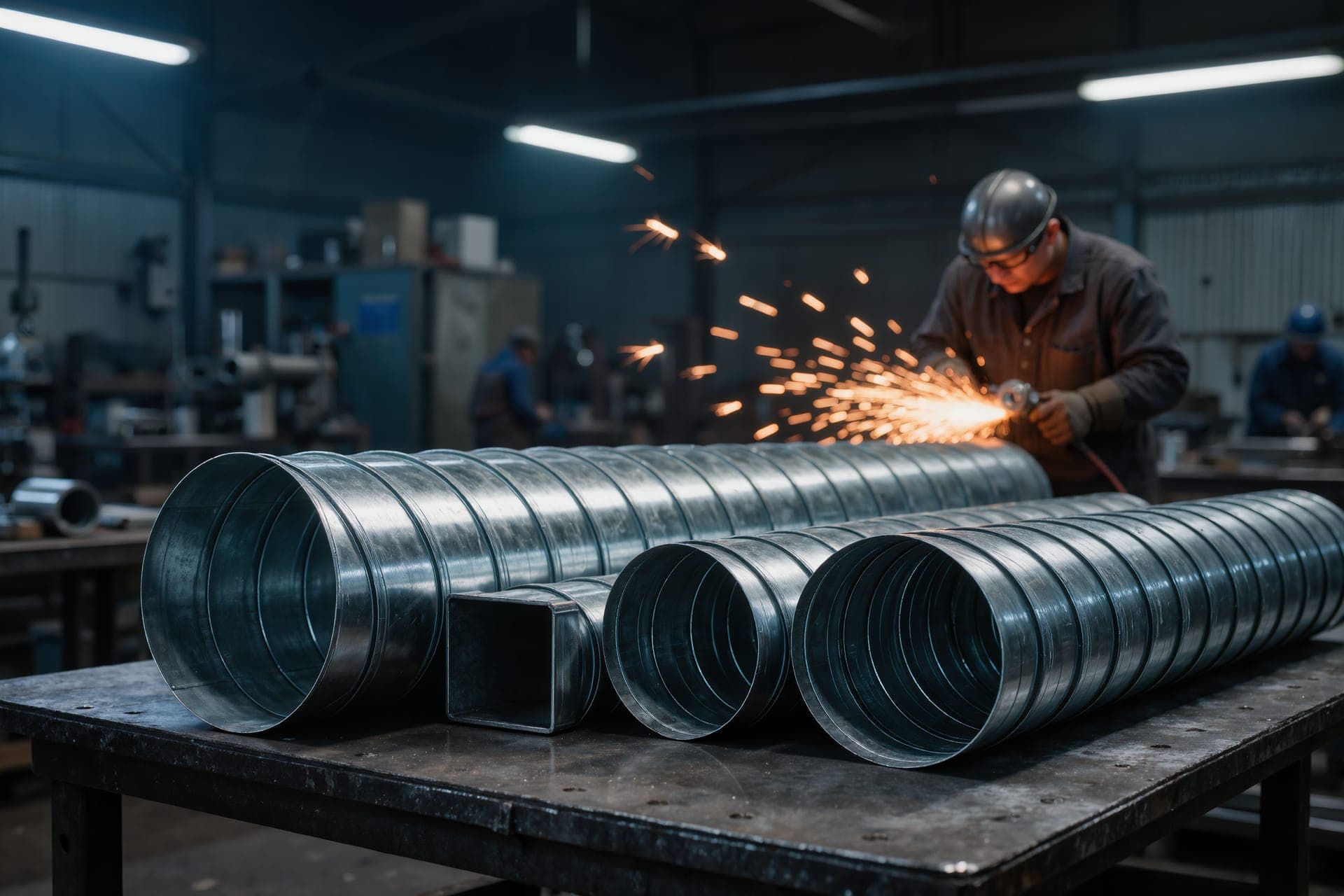
We inspect and repair existing systems, too: resealing compromised welds, replacing failed sections, adding missing access panels, and correcting the improvised work that shows up in older buildings when nobody was watching.
After every inspection you get photographs and an honest map of where the system stands against code. If it is compliant, we say so. If it is not, you will know exactly what fixing it takes — before the fire marshal or the insurance adjuster puts the same question less politely.
Straight Answers
Questions We Hear on This One
What makes grease duct different from regular ductwork?
Ordinary duct moves air; grease duct contains fire risk. The code requires heavier gauge steel, continuous liquid-tight welds, specific clearances, fire-rated enclosures, and cleanout access — a different discipline entirely from standard sheet metal.
Our inspector flagged our duct. Can you fix it?
Yes. We handle correction work constantly — replacing non-compliant sections, adding access panels, and building enclosures. We will translate the inspection report into a fixed-price scope and clear it with the AHJ.
How often must grease ducts be cleaned?
NFPA 96 sets frequency by cooking volume and type — from monthly for solid-fuel operations to annually for low-volume kitchens. We can inspect, advise on the correct interval, and keep the records inspection-ready.
Do you coordinate with fire suppression contractors?
Routinely. Hood, duct, fan, and suppression must work as one system, and we manage that coordination on both new installations and retrofits.
More in Air & Ventilation
Free Commercial Estimate
Get a Straight Answer and a Free Estimate
Tell us what the building needs. We'll tell you what it costs — plainly, promptly, and without a sales pitch.
Same-day response. Answered by a person with the authority to act, not a queue with a hold song.
Upfront pricing. The figure quoted is the figure invoiced. The arithmetic never changes after the fact.
Veteran owned & operated. Early, exact, and accountable — the doctrine came before the company.
Prefer the phone? It's answered around the clock: (480) 863-5855