Commercial HVAC Equipment
VAV Box & Terminal Unit Repair in Phoenix, AZ
The air handler makes the air. Two hundred small boxes in the ceiling decide who gets it.
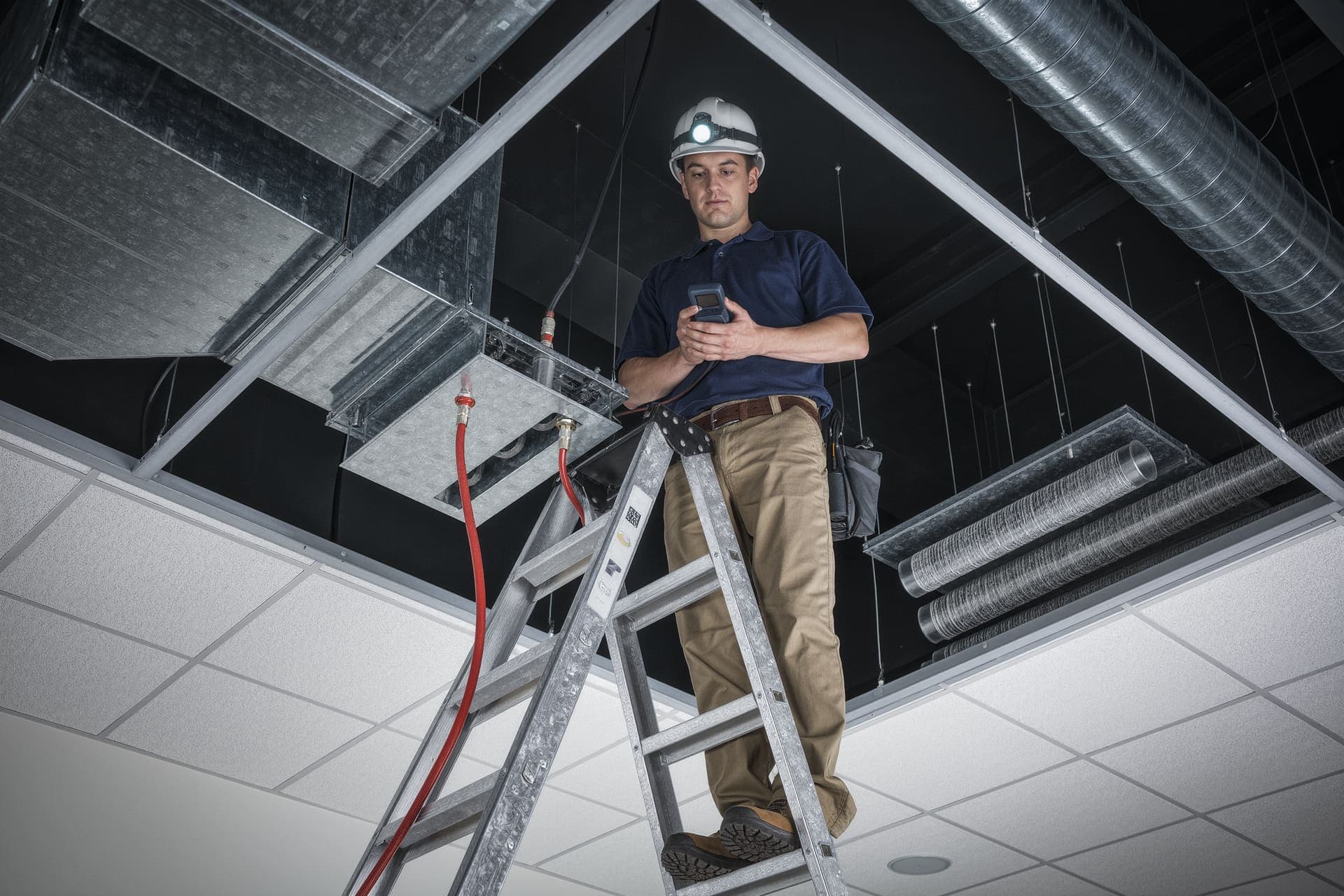
In a variable-air-volume building, a central air handler supplies cold air at constant temperature, and a terminal unit above every zone — a VAV box — modulates a damper to deliver exactly as much of it as that zone needs. When a zone needs heat, the box may add reheat from a hot-water coil or electric element, or a fan-powered box may mix in warm plenum air. It is an efficient, flexible design, and it depends on hundreds of small mechanical devices working correctly in ceilings nobody looks into. Bleuwave services VAV and fan-powered terminal units, their dampers, actuators, controllers, sensors and reheat coils, and the test-and-balance that keeps the whole system delivering design airflow.
Most hot-and-cold complaints in a VAV building trace to a terminal unit, not to the air handler. A damper actuator has failed with the damper nearly closed, and the corner office is stifling. A flow sensor has drifted, and a conference room is freezing because its box thinks it is delivering half the air it actually is. A reheat valve is stuck open and a zone is heating and cooling at the same time — comfortable enough, and ruinously expensive. Finding these problems requires diagnosis at the box, and fixing them is typically inexpensive relative to the complaints they generate.
Symptoms We Are Called For
What It Looks Like, and What It Usually Is
| Symptom | Likely causes |
|---|---|
| Persistent hot or cold complaints in specific zones | Failed or stuck actuator, drifted flow sensor, wrong controller setpoint, or a reheat valve stuck open or closed. Diagnosed at the box. |
| Whistling or rushing noise at a diffuser | Damper throttled hard against high static pressure — often the air handler's static setpoint is too high for current load. |
| Zone heating and cooling at the same time | Reheat valve stuck open or a controls sequence fault. Comfortable, invisible and expensive. |
| Complaints across the building after a controls change | Global setpoint or schedule change in the building automation system affecting every box — a sequence review, not a box repair. |
| Boxes not responding on a pneumatic system | Compressor failure, air-line leaks, dryer problems, or failed diaphragms in the actuators. |
Terminal Equipment and Controls
Single-duct VAV boxes, fan-powered boxes (series and parallel), dual-duct units and induction units from Titus, Price, Nailor and Krueger make up the installed base. Each carries a controller — from the box manufacturer, from the building automation vendor (Trane, Carrier, Johnson Controls and others supply factory-mounted VAV controllers) or, in older buildings, a pneumatic thermostat and actuator. The controller reads a flow sensor and a zone temperature, positions the damper, and stages reheat.
Pneumatic VAV systems — Barber-Colman, Robertshaw, Powers and Honeywell pneumatic controls — survive in many Phoenix buildings from the 1970s and 1980s. They work, when maintained, but compressed-air leaks, failed diaphragms and drifting calibration accumulate, and every year fewer technicians know how to service them. Pneumatic-to-DDC conversion is a significant category of terminal-unit work.
Phoenix Considerations
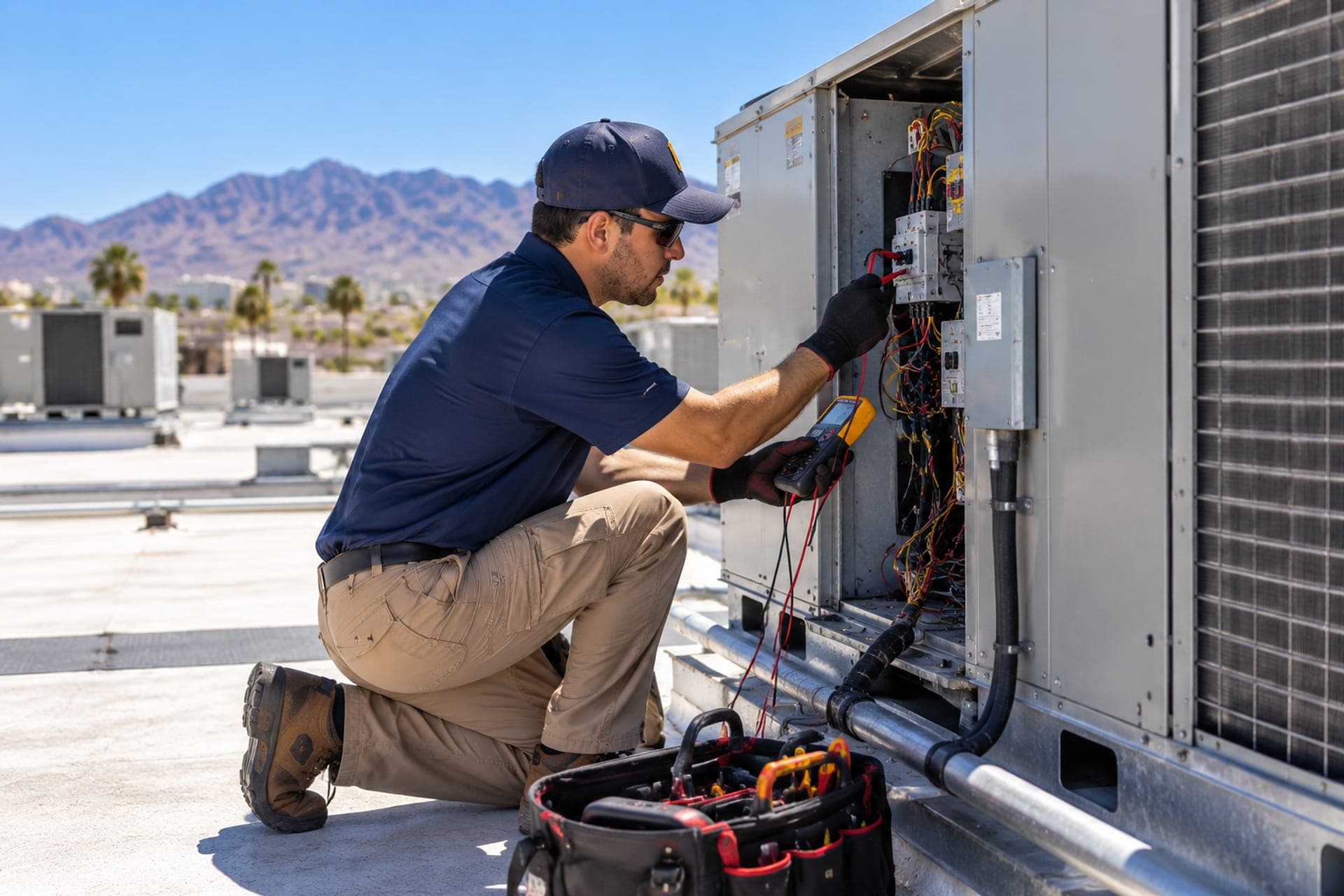
Ceiling plenums in Phoenix buildings run hot. A VAV box above a top-floor ceiling under a summer roof sits in air that can exceed 100 degrees, which shortens actuator and controller life and, in fan-powered boxes, means the plenum air the box mixes in is warmer than the design assumed. Dust reaches the plenum and settles on flow sensors, drifting their readings. Reheat coils on hot-water systems may see no flow for eight months and then be expected to work on the first cold morning.
The long cooling season also means VAV dampers spend most of the year modulating in a narrow range, and actuators wear unevenly. A box that has been throttling at 30 percent for six months may not open fully when the zone finally needs it.
Diagnosis and Repair
We start at the complaint zone and work backward: verify the zone sensor reads correctly, verify the controller is commanding the damper appropriately, verify the actuator moves the damper through its full stroke, verify measured airflow matches the controller's reading and the design value, and check reheat operation. Then we look at the system: is the air handler delivering adequate static pressure? Is the supply-air temperature right? A building full of boxes at 100 percent open with hot zones is an air-handler problem wearing a terminal-unit disguise.
Repairs cover actuator and damper replacement, flow-sensor cleaning and recalibration, controller replacement or reprogramming, reheat valve and coil service, fan and motor replacement on fan-powered boxes, and pneumatic component replacement or DDC conversion. Test-and-balance — measuring and adjusting airflow at every box and diffuser against design — is the systematic version, and it resolves the complaints that individual repairs cannot.
Replacement and Conversion
Terminal units rarely need wholesale replacement; the boxes themselves are simple sheet-metal assemblies that last decades. What gets replaced is the controls layer. Converting a pneumatic VAV system to DDC — new actuators, controllers and sensors on existing boxes, integrated with a building automation system — transforms an unmanageable building into one that reports its own problems, and it is one of the highest-value controls projects available in an older office building. Box replacement is reserved for units that are physically damaged, wrongly sized for a reconfigured space, or of a type (older induction units, for instance) that cannot be retrofitted sensibly.
Manufacturers We Encounter
Brands in the VAV & Terminal Units Category
Bleuwave services these manufacturers on an independent basis. Each page covers the families we see in Phoenix and how we approach them.
Straight Answers
Questions We Hear on This One
Why is one office always hot when the rest of the floor is fine?
Almost always the VAV box serving it — a failed actuator, a damper stuck nearly closed, a drifted flow sensor or a controller problem. It is usually a modest repair once the box is diagnosed, which requires getting into the ceiling and testing it.
Our building has pneumatic controls. Can they still be serviced?
Yes, and we do. But pneumatic systems accumulate leaks and calibration drift, and fewer technicians service them each year. We also perform pneumatic-to-DDC conversions, which typically pay back through energy savings and eliminate the recurring complaint cycle.
What is test-and-balance and when is it needed?
Measuring airflow at every terminal unit and diffuser and adjusting the system to deliver design values. It is needed after tenant reconfigurations, after air-handler changes, and whenever a building has accumulated enough individual adjustments that nobody knows what the system is actually doing.
Do we need to replace our VAV boxes?
Rarely. The boxes are durable; the controls on them are what age. Replacing actuators, controllers and sensors on existing boxes is the usual path, with box replacement reserved for damaged or badly missized units.
Free Commercial Estimate
Get a Straight Answer and a Free Estimate
Tell us what the building needs. We'll tell you what it costs — plainly, promptly, and without a sales pitch.
Same-day response. Answered by a person with the authority to act, not a queue with a hold song.
Upfront pricing. The figure quoted is the figure invoiced. The arithmetic never changes after the fact.
Veteran owned & operated. Early, exact, and accountable — the doctrine came before the company.
Prefer the phone? It's answered around the clock: (480) 863-5855